Role of Stakeholders in Digitalisation of Construction

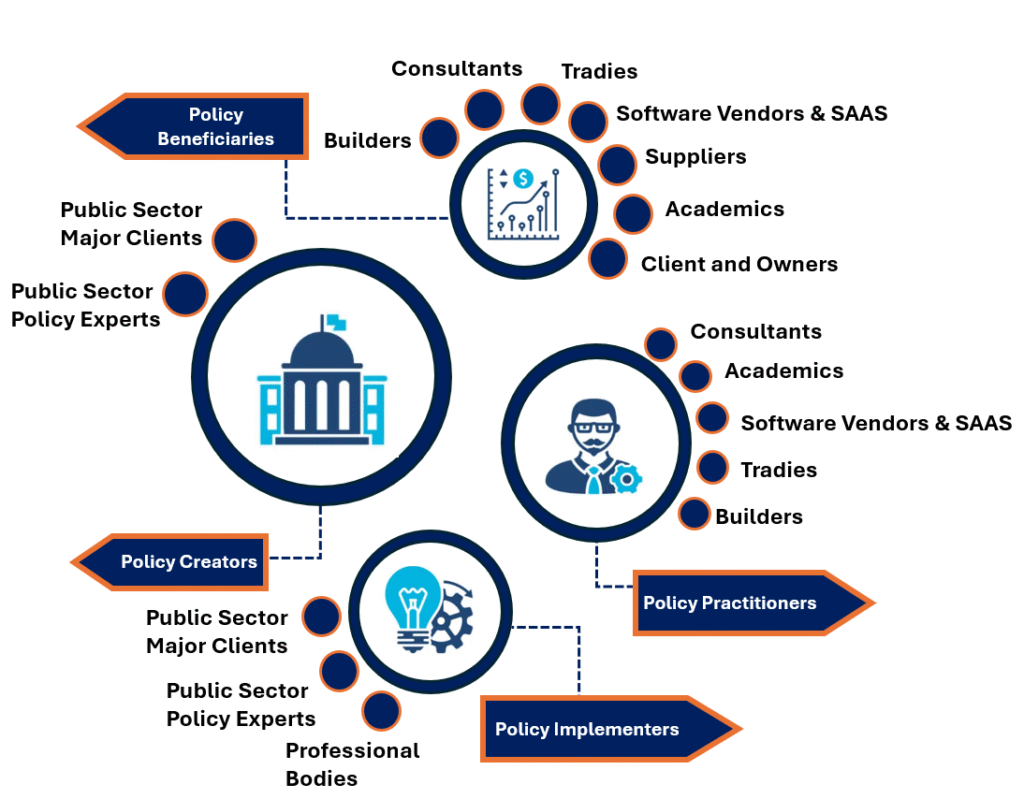
Stakeholder identification is a critical component of the DigiCon Policy Directions Framework, as it establishes the roles and responsibilities of each group involved in the formulation and implementation of digitalisation policies. Based on a comprehensive review of the literature, ten key stakeholder types were identified and systematically categorised into four functional groups: Policy Creators, Implementers, Practitioners, and Beneficiaries, according to their roles in policy development and execution. These stakeholders include Consultants, Clients & Owners, Public Sector Major Clients, Contractors, Trades, Public Sector Policy Experts, Suppliers, Software Providers, Academics, and Professional Bodies.

The four stakeholder categories are:

  • Policy Creators: Stakeholders responsible for formulating and initiating digital policies, strategies, and regulatory guidelines 
  • Implementers: Entities that execute and enforce policies, ensuring compliance and operationalising strategies 
  • Practitioners: Professionals actively working within the framework defined by policies and implementation strategies
  • Beneficiaries: Stakeholders who derive benefits from implemented policies or initiatives 

Following figure illustrates the mapping of these ten stakeholder types into the above four categories based on their roles and responsibilities in policy development. This classification provides a structured approach to policy design, enabling clearer stakeholder engagement strategies and ensuring alignment of responsibilities throughout the policy cycle.


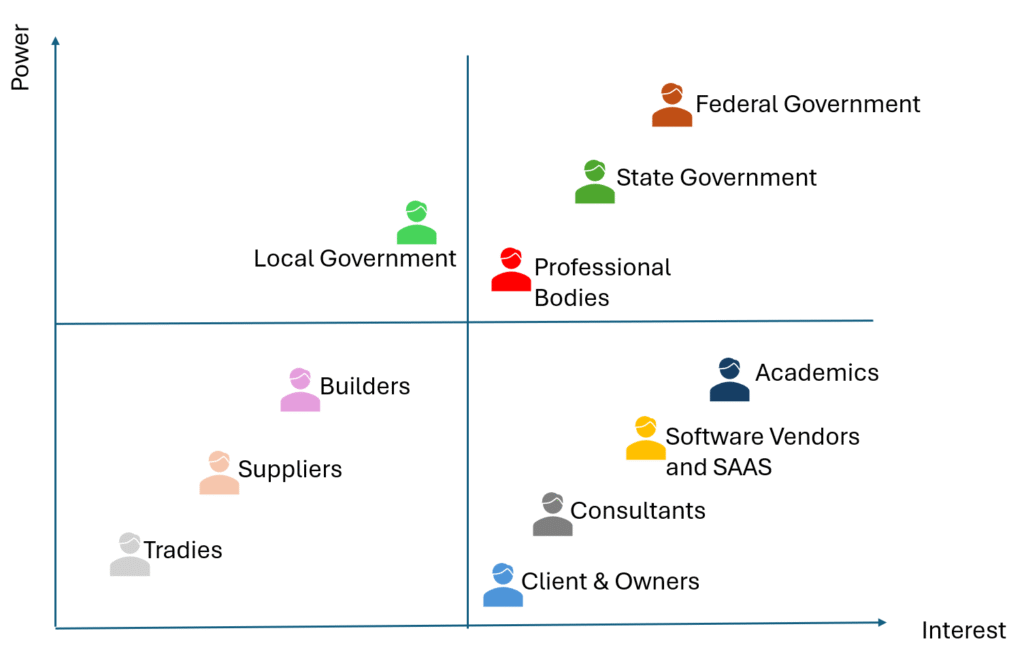
Stakeholders Analysis for Digitalisation of Construction for Public Policy

Key influencers such as the Federal Government, State Government, and Professional Bodies hold both high power and interest, making them central to policy formulation. Local Governments possess significant power but show lower interest, indicating a need for better engagement. Stakeholders like Academics, Software Vendors, and Consultants show high interest but limited power, making them valuable contributors for technical insights and feedback. Tradies, Suppliers, and Builders fall into the low power–low interest quadrant, yet their operational input is essential for practical implementation. This mapping supports targeted engagement strategies, ensuring balanced and inclusive policy development.

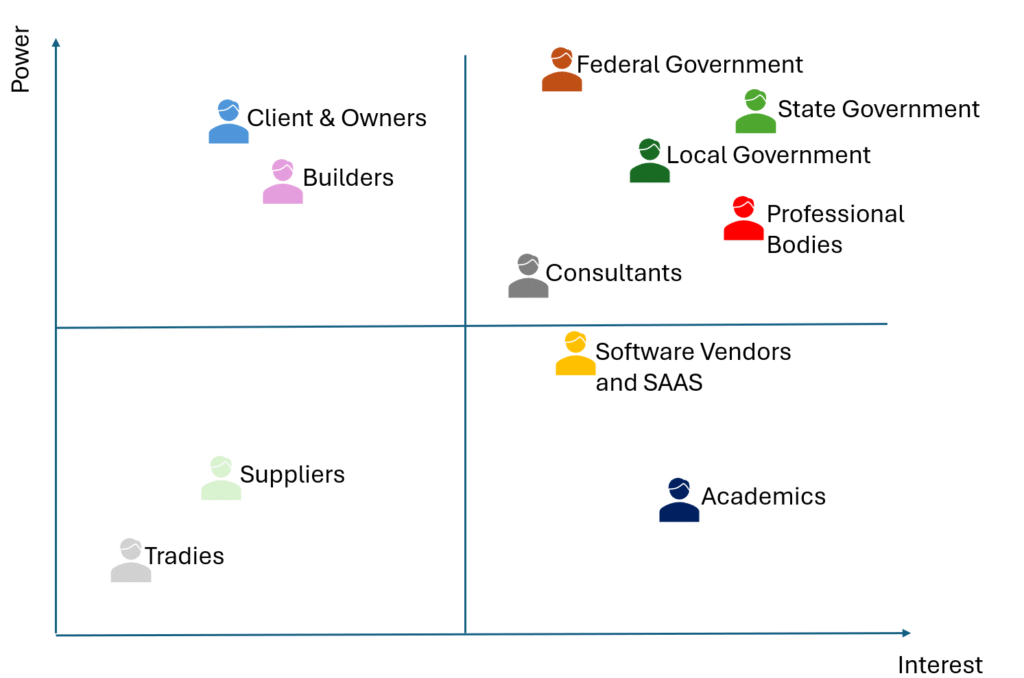
Stakeholder Analysis for Digitalisation of Construction for

Organisational Policy

The Federal, State, and Local Governments, along with Professional Bodies, remain influential even in private policy contexts due to regulatory alignment and certification influence. Clients & Owners and Builders possess high power, shaping internal digital strategies and project execution standards. Consultants and Software Vendors are positioned with moderate power and high interest, indicating their importance in advising and delivering tailored digital solutions. Academics show strong interest but limited influence, contributing research and innovation. Tradies and Suppliers remain low in both power and interest but are essential for policy implementation at the operational level. This distribution supports a collaborative yet business-driven approach to digital policymaking in the private sector. 

Scroll to Top