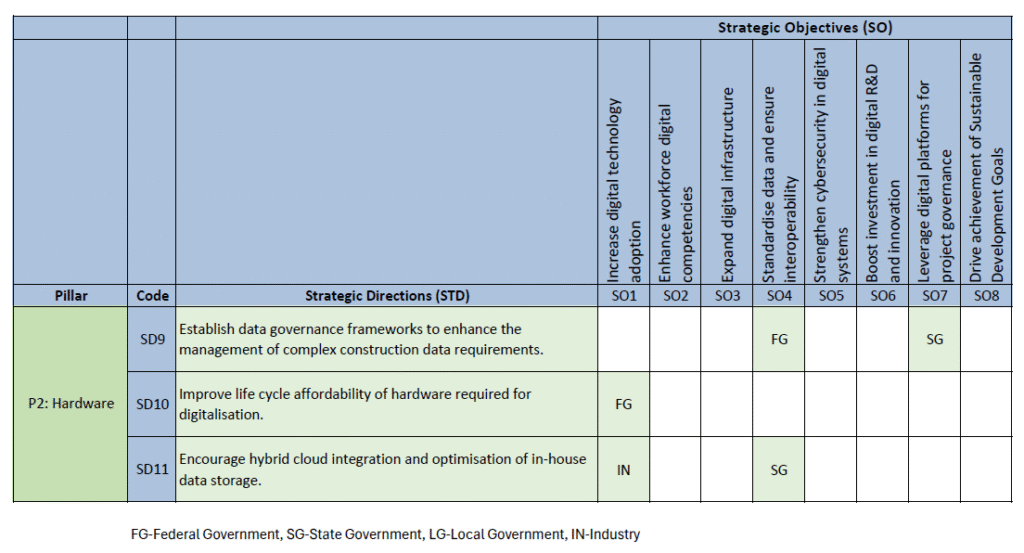
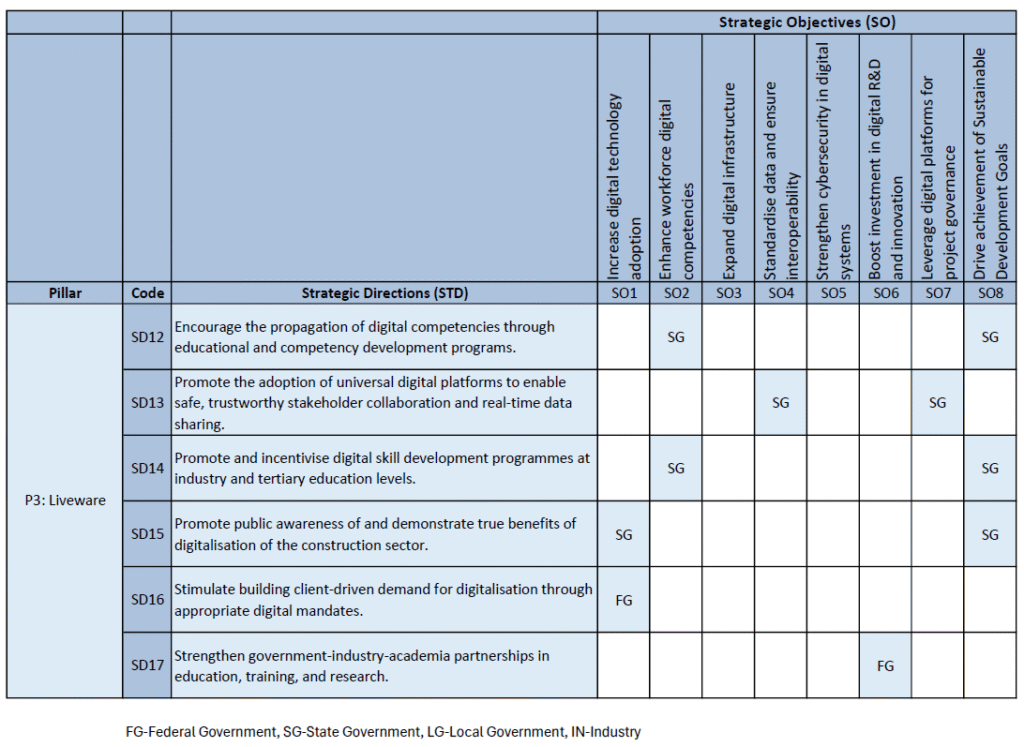
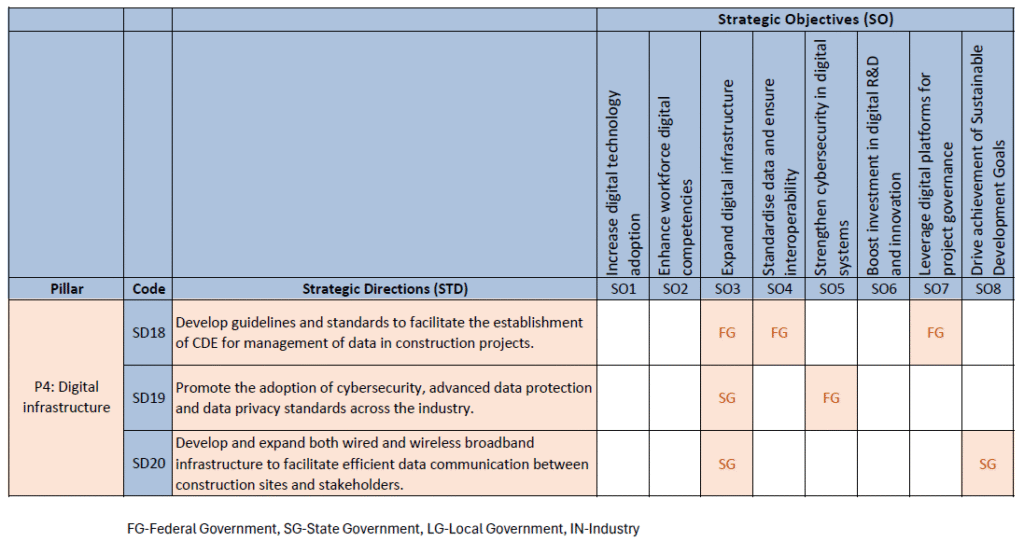
This is a mapping of strategic directions to strategic objectives and categorised under four pillars.
The framework identifies four key pillars that form the foundation for effective digitalisation policies: software, hardware, liveware (people), and digital infrastructure. Each pillar represents a critical dimension of digital transformation, and the study examined factors influencing their successful implementation. The Strategic Directions (SD) under each pillar were identified through careful analysis of factors affecting the digitalisation. Factors identified through a comprehensive literature review are neutral in nature, meaning they can act as either drivers or barriers depending on how they are addressed. Their role and impact will be further explored in the performance indicators section.
Further, the DigiCon policy framework defines four governance levels responsible for implementing digitalisation policies:
- Industry – Professional bodies and enterprises
- Local Government
- State Government
- Federal Government
During all phases of data collection, the roles and responsibilities of each governance level in addressing the strategic directions were examined. The following section explains these governance levels mapped to the corresponding strategic directions for developing digitalisation policies.
State and Federal governments hold the highest responsibility for creating and implementing digitalisation policies within the construction sector. While local government also plays a role in policy implementation, the primary responsibility lies with State and Federal authorities.